
The conversation surrounding Nigeria’s upcoming 2027 electoral cycle is rapidly shifting. For everyday citizens, civil society groups, and political strategists, the focus is moving past standard campaign promises and landing squarely on a critical reality: structural accountability, electoral integrity, and institutional reform are the only real mechanisms that can stabilize the nation.
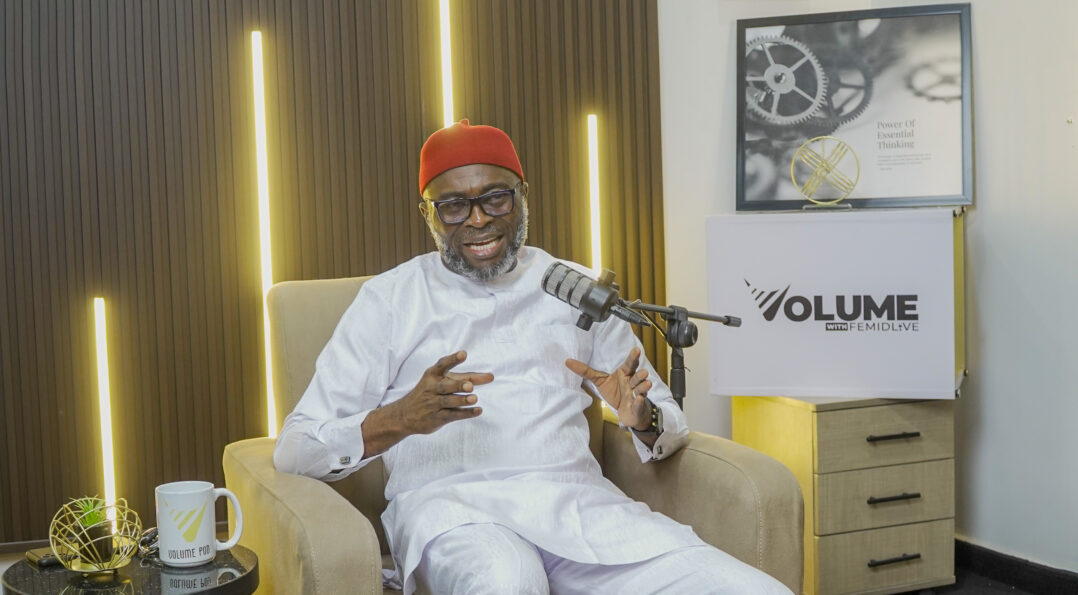
In a recent episode of Volume with FemiDlive, hosted by award-winning broadcaster Femi D. Amele on The Volume Pod, these systemic challenges were pulled apart. Featuring Dr. Chinedu Obi—National Chairman of the National Rescue Movement (NRM) and Director General of the Inter-Party Advisory Council (IPAC)—the discussion provided a transparent, data-driven look at how the country’s multi-party ecosystem functions behind the headlines. Instead of focusing on sensational top-tier Abuja politics, the conversation offered a strategic roadmap for political realignment before 2027.

1. Dismantling the Myth of “Big Parties” vs. “Small Parties”
A dominant narrative in Nigerian media is that elections are exclusively a two- or three-horse race between giant political structures. However, as Dr. Obi pointed out, Nigeria currently features a diverse landscape of 22 registered political parties. The perceived strength of a party often depends on its members’ access to public funds rather than structural superiority.
[Access to Public Funds] ──> [Media Focus & Bloated Visibility] ──> [Perceived "Big Party" Status]
When prominent political figures switch platforms—such as Peter Obi’s historic move to the Labour Party or more recent migrations to the ADC and NNPP—the destination party suddenly experiences a massive spike in public visibility. Real systemic change, however, requires moving away from individual star power and focusing on deep-rooted party ideologies. For alternative platforms like the NRM, the goal is to shift the country from a culture of personality worship to sustainable, process-driven governance.
2. Institutional Strength Over Strongmen: Setting a Leadership Precedent
If alternative political movements want to present themselves as viable rescue options for the nation, they must practice internal accountability. A fascinating case study emerged during the interview regarding the internal discipline of political platforms.
“When you want to rescue a country, you need to rescue yourself first. It requires a bold step to demonstrate to citizens that leadership must be by example.”
When the NRM suspended its own founding chairman due to internal process violations, it set a rare example in Nigerian politics. Rather than shielding an elite founder, the party prioritized institutional rules over individual status. This stands in sharp contrast to the internal power struggles plaguing larger establishments like the Peoples Democratic Party (PDP) and the All Progressives Congress (APC), where personal networks regularly bypass formal rules. For 2027, the primary test for any political party will be its willingness to stick to the rule of law over personal convenience.
3. Electoral Integrity: The Independent Referee Conundrum
A central element of the 2027 planning process involves reforming the Independent National Electoral Commission (INEC). Under current constitutional guidelines, the executive branch holds the power to appoint the electoral umpire. This framework introduces a clear structural conflict of interest.
To guarantee transparency and protect the voter mandate across all 774 Local Government Areas (LGAs), IPAC’s committee on electoral reforms has pushed for a multi-sectoral approach to appointments.
| Proposed Reform Component | Current System | The Multi-Sectoral Alternative |
| Umpire Selection | Unilateral executive appointment | A collaborative selection committee featuring political parties, judicial bodies, and civil society. |
| Vetting Process | Internal political clearance | Open, public application screening supported by state security documentation. |
| Oversight Composition | Centralized administrative control | Balanced civil society representation alongside trusted domestic monitoring groups. |
Without these institutional adjustments, technological tools like the Bimodal Voter Accreditation System (BVAS) and the INEC Result Viewing Portal (IReV) will continue to face implementation bottlenecks.
4. Shifting Metrics: Measuring the Grassroots Economy
While macro-economic figures like GDP growth and reserve allocations look great in policy papers, they often fail to align with the financial realities of ordinary citizens. The true health of the Nigerian economy is felt at the micro-level—through purchasing power, transportation costs, and basic food security.
For instance, comparing the utility of a 70,000 Naira minimum wage against previous 30,000 Naira standards reveals a simple truth: if a citizen cannot buy a basic bag of rice or afford daily transport to work, the macro-economic policies are missing their target. True socio-economic recovery requires moving away from top-down rhetoric and focusing on community-level development, budget tracking, and social welfare infrastructure.
The Path to 2027
Nigeria’s political future depends heavily on whether the country can transition from a culture of political entitlement to one of clear, measurable accountability. For young voters, policy analysts, and engaged citizens seeking an alternative to standard media narratives, keeping tabs on these foundational shifts is critical.
Platforms like The Volume Pod (Volume Pod LLC) continue to serve as essential media hubs, bringing in diverse political voices and civil society leaders to break down complex policy issues and analyze their real-world impact. The coming months will reveal whether alternative parties can successfully build out their local networks and offer a disciplined, rule-of-law-driven alternative to the status quo.