
Nigerian Economy

No One will Vote for Tinubu in 2027 Elections if…

In a recent hard-hitting interview on Volume with FemiDlive, political activist and commentator Henry Shield delivered a blistering critique of the current Nigerian administration under President Bola Tinubu. The conversation, titled “No One will Vote for Tinubu in 2027 Elections if…”, paints a grim picture of a nation grappling with economic hardship, a perceived decline in democratic values, and a fragmented opposition. The “Emperor” and the Vanishing Rule of Law Shield did not mince words when describing the current state of governance, suggesting that Nigeria is drifting away from democratic ideals toward what he termed an “imperial” style of leadership. He cited recent incidents involving the harassment of journalists and citizens at court premises as evidence of a “non-existent” rule of law. “You are calling him president; I see him as an emperor—His Royal Majesty King Tinubu.” [31:28] The Economic Toll on the Common Citizen The heart of Shield’s grievance lies in the skyrocketing cost of living. He pointed to the dramatic leap in fuel prices—from approximately 145 Naira to 1,000 Naira—as a “shock” that no citizenry should be expected to absorb without significant government accountability. He criticized the government’s focus on paper indices and “theory” while the average Nigerian struggles to afford basic necessities like rice, which has surged toward the 100,000 Naira mark. “The only indices that count in the economy of any nation, the only factor that matters, is the improvement in the lives of the people. Any other thing is paper discussion.” [10:14] A Call for Opposition Sacrifice Looking toward the 2027 elections, Shield expressed deep frustration with the current opposition leaders, including Atiku Abubakar and Peter Obi. He argued that their personal ambitions are currently standing in the way of a unified front that could challenge the APC. Shield, who campaigned vigorously for the Atiku-Obi ticket in 2019, lamented their split in 2023 and urged them to prioritize the “larger good” over individual goals. “There is no ambition that is big enough for you, or that is bigger than the interest of the country… they first of all need to save Nigeria from the APC.” [14:42] The Burden of Taxation and Transparency The activist also took aim at proposed new tax policies, arguing that the government has yet to prove it can be a responsible steward of existing resources. He highlighted the lack of transparency in high-profile expenditures, such as the presidential jet and yacht, as reasons why citizens are hesitant to give more. “Taxing is not the first thing. First thing is system… A system that makes it impossible for you to take my money because it’s my tax.” [28:03] The “Defeated” Citizenry Perhaps the most poignant part of the interview was Shield’s reflection on the state of Nigerian activism. He expressed a sense of fatigue, noting that while he is willing to stand his ground, he often finds himself part of a very small group actually willing to “hit the streets.” “I have actually decided to just slow down because I am yet to find Nigerians who reason like citizens. What I see are people who now reason like defeated and conquered citizens.” [06:08] Conclusion Henry Shield’s message is a clarion call for both the leadership and the populace. For the government, it is a warning that economic “baby steps” are resulting in giant leaps of pain for the poor. For the opposition, it is a demand for unity. And for the citizens, it is an invitation to reclaim their voice in a democracy that Shield fears is quickly slipping away. Watch the full interview here: https://youtu.be/C9a5AgX1jx8

No One will Vote for Tinubu in 2027 Elections if… Read More »
Nigeria’s Economic Pivot Hits ‘Wits’ End’ as Political Opposition Vanishes

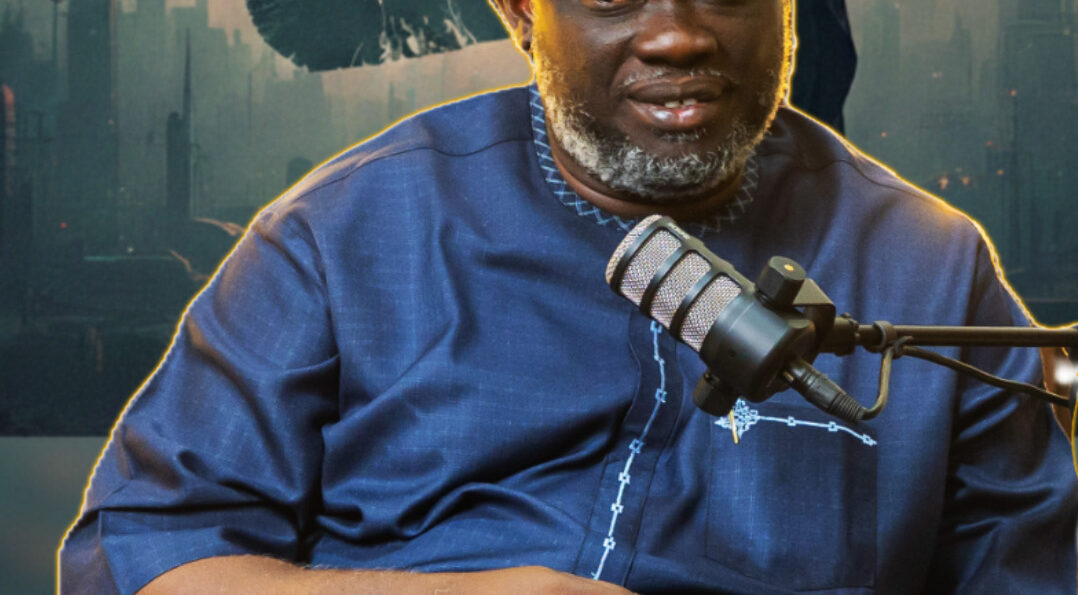
Nigeria’s attempt to transition toward a market-driven economy has reached a state of exhaustion, undermined by a “tactical rollback” of reforms and a political vacuum where a viable opposition no longer exists, according to Majeed Dahiru, a prominent Nigerian political strategist and public affairs analyst. In an expansive year-end assessment on the podcast Volume with FemiDlive, Dahiru argued that the nation’s democratic architecture is currently operating on only one of its two necessary pillars. While the ruling All Progressives Congress (APC) struggles with the fallout of its fiscal policies, the primary opposition—the People’s Democratic Party (PDP)—has descended into “post-Buhari oblivion,” leaving the electorate without a credible alternative framework for governance. “Nigeria is not only suffering from failure of governance,” Dahiru said. “Nigeria has a problem of failure of opposition”. He noted that for the first time in the country’s 25-year democratic journey, there is no organized political force offering a rigorous policy counter-narrative to the government’s controversial moves, such as the removal of fuel subsidies or the floating of the local currency. The ‘Tactical Rollback’ of Reforms The central economic thesis of President Bola Tinubu’s administration—the removal of the petrol subsidy and the unification of the Naira’s exchange rate—is being quietly dismantled to prevent a total social collapse, Dahiru contended. He described the current state of the Naira as “floating aimlessly” toward the 2,000-per-dollar mark before the central bank was forced to intervene. Dahiru pointed to audited financial statements suggesting that the government is still spending trillions of Naira on “energy security,” which he characterized as a euphemism for the very subsidies the administration claimed to have abolished. This “tactical rollback,” he argued, proves that the neoliberal orthodoxies currently being tested in Nigeria are ill-suited for its unique developmental stage. “There is no alternative to government intervention in energy,” Dahiru stated, suggesting that the administration’s initial “shock therapy” was more a result of ideological pressure than practical economic planning. He warned that the government’s failure is not the principle of intervention itself, but the “meritocracy” and integrity of the officials managing those interventions. The ‘E-Lock’ Metaphor for Institutional Decay The social consequences of these economic shifts are perhaps most visible in the hallowed halls of the National Assembly. In a striking anecdote illustrating the deepening chasm between the ruling class and the public, Dahiru revealed that lawmakers from Northern Nigeria have begun installing electronic locks on their office doors to barricade themselves against constituents seeking financial aid. “They can no longer cater for the number of people coming to see them,” Dahiru said, explaining that the traditional patronage networks of the North have been shattered by skyrocketing inflation. The “e-lock” has become the new symbol of a representative democracy where the representatives are now in hiding from the represented. Security and the ‘Genocide’ Debate The interview also touched on the worsening security situation in Nigeria’s Middle Belt, specifically in Plateau and Benue states. Dahiru criticized the semantic debates regarding whether the killings of agrarian communities should be labeled a “Christian genocide,” arguing that the focus on terminology distracts from the catastrophic failure of the state to protect its citizens. Noting that Nigeria has been designated a “country of particular concern” by international observers, Dahiru called for a “shock therapy” approach to national security. He made a poignant appeal for religious empathy, urging the Northern Muslim elite to take greater responsibility for addressing the “banditry” and “herdsmen” violence that emanates from within their demographic fold. “The people that are responsible for both the killing of members of our own family and our Christian brethren come from our family,” Dahiru said. The Road to 2027 Looking ahead to the 2027 election cycle, Dahiru was skeptical of the opposition’s ability to regroup. He blamed the PDP’s current “oblivion” on its decision to ignore the geographic zoning traditions in the 2023 election, which fractured its southern base and birthed the “Obidient” movement under Peter Obi. Without a “valid framework” for the future and an opposition capable of intellectual engagement, Dahiru warned that Nigeria risks remaining in a state of political and economic stasis, where policies are “aimlessly” floated and institutional doors remain electronically locked against the masses. Watch the full interview:

Nigeria’s Economic Pivot Hits ‘Wits’ End’ as Political Opposition Vanishes Read More »