femidlive

Crisis of Values: Rethinking Nigeria’s Democracy and Judicial Integrity

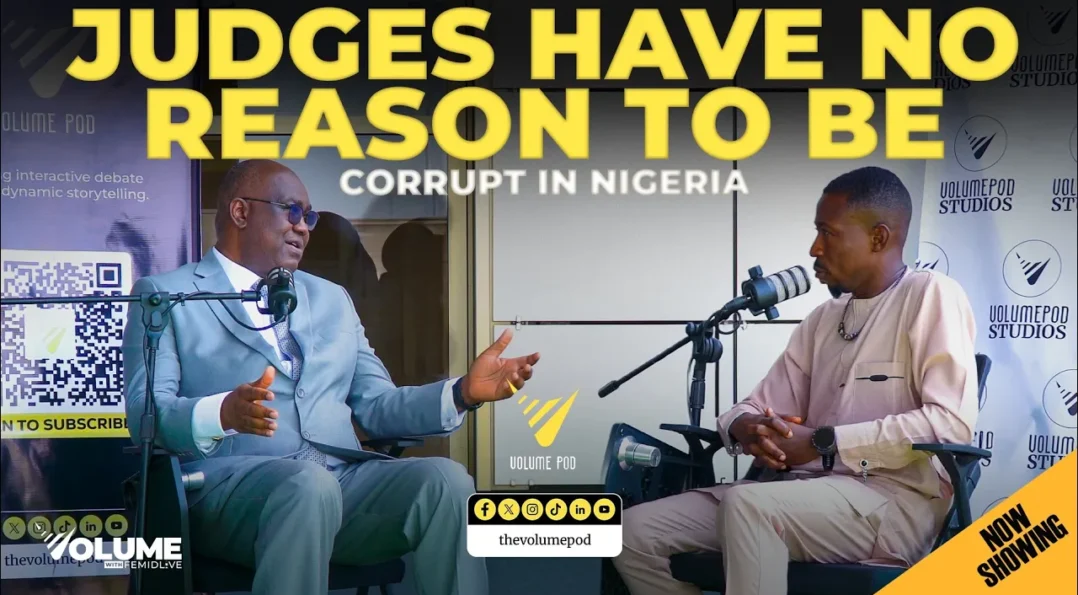
In a compelling dialogue at the National Conference on the Future of Democracy in Nigeria, Honorable Dr. Gbenga Olawepo Hashim provided a sobering assessment of the nation’s current political and judicial landscape. His insights challenge the common narrative that Nigeria’s problems are purely economic, suggesting instead that the country is grappling with a profound “poverty of values” that threatens the very foundation of its democratic institutions. The Problem with Institutional Recruitment Dr. Hashim highlighted a critical flaw in the formation of the Independent National Electoral Commission (INEC). While some recommendations for independence—such as funding via a first-line charge—were accepted during the transition from military rule, the method of recruiting leadership remains a point of contention. He argues that the current system allows the executive to maintain too much control by appointing “dodgy” individuals who are easily manipulated. “When you have a transparent process of recruitment and the person that is being appointed is subjected to public debate, he will hold his loyalty to society rather than to few people who appoint him in government.” [04:46] Material Poverty vs. Poverty of Values One of the most striking parts of the discussion centered on the phenomenon of vote-buying. While many attribute this to the economic hardship facing Nigerians, Dr. Hashim drew a historical parallel to the 1950s to illustrate that integrity is not dictated by wealth. He noted that even when Nigerians were materially poorer, they held their political leaders to higher standards. “It’s not a question of material poverty; it’s about poverty in values. We have to go back and strengthen our value system because it is these intangible things—values, culture—that build society.” [06:01] He further emphasized this point by contrasting the past and present: “In the 50s, if you give them a bag of rice, they will not vote for you. They will still vote for their trusted political leaders. But Nigerians today, some of them who eat rice every day, if you give them a cup of rice, they are ready to vote for you.” [05:51] The Independence of the Judiciary The conversation also turned to the judiciary, an institution often seen as the last hope for the common man. Dr. Hashim expressed concern that while judges are now better compensated than ever before, their independence seems more compromised than it was even under military dictatorship. He suggests that financial corruption has achieved what brute force could not. “What military dictatorship could not do, money corruption is doing now. Judges are now more paid than they have ever been paid… they have no reason not to stand for justice and equity.” [07:21] Looking Toward 2027 As Nigeria looks toward the 2027 elections, the fear of widespread vote-buying looms large. However, Dr. Hashim offered a glimmer of hope, suggesting that collective will can override financial manipulation. He believes that if the majority of the population is truly committed to change, the sheer volume of voters will make individual bribes inconsequential. “There will be vote buying, but it’s not going to be consequential if majority of people are ready really to vote for change. You can’t buy millions of people when they are out to really vote.” [06:34] Ultimately, Dr. Hashim’s message is a call to action for all Nigerians to reclaim their cultural and moral values. Without a foundation of integrity, material achievements and institutional structures will continue to crumble under the weight of corruption. Watch the full interview here: https://youtu.be/Csh7n_qacKE

Crisis of Values: Rethinking Nigeria’s Democracy and Judicial Integrity Read More »

No One will Vote for Tinubu in 2027 Elections if…

In a recent hard-hitting interview on Volume with FemiDlive, political activist and commentator Henry Shield delivered a blistering critique of the current Nigerian administration under President Bola Tinubu. The conversation, titled “No One will Vote for Tinubu in 2027 Elections if…”, paints a grim picture of a nation grappling with economic hardship, a perceived decline in democratic values, and a fragmented opposition. The “Emperor” and the Vanishing Rule of Law Shield did not mince words when describing the current state of governance, suggesting that Nigeria is drifting away from democratic ideals toward what he termed an “imperial” style of leadership. He cited recent incidents involving the harassment of journalists and citizens at court premises as evidence of a “non-existent” rule of law. “You are calling him president; I see him as an emperor—His Royal Majesty King Tinubu.” [31:28] The Economic Toll on the Common Citizen The heart of Shield’s grievance lies in the skyrocketing cost of living. He pointed to the dramatic leap in fuel prices—from approximately 145 Naira to 1,000 Naira—as a “shock” that no citizenry should be expected to absorb without significant government accountability. He criticized the government’s focus on paper indices and “theory” while the average Nigerian struggles to afford basic necessities like rice, which has surged toward the 100,000 Naira mark. “The only indices that count in the economy of any nation, the only factor that matters, is the improvement in the lives of the people. Any other thing is paper discussion.” [10:14] A Call for Opposition Sacrifice Looking toward the 2027 elections, Shield expressed deep frustration with the current opposition leaders, including Atiku Abubakar and Peter Obi. He argued that their personal ambitions are currently standing in the way of a unified front that could challenge the APC. Shield, who campaigned vigorously for the Atiku-Obi ticket in 2019, lamented their split in 2023 and urged them to prioritize the “larger good” over individual goals. “There is no ambition that is big enough for you, or that is bigger than the interest of the country… they first of all need to save Nigeria from the APC.” [14:42] The Burden of Taxation and Transparency The activist also took aim at proposed new tax policies, arguing that the government has yet to prove it can be a responsible steward of existing resources. He highlighted the lack of transparency in high-profile expenditures, such as the presidential jet and yacht, as reasons why citizens are hesitant to give more. “Taxing is not the first thing. First thing is system… A system that makes it impossible for you to take my money because it’s my tax.” [28:03] The “Defeated” Citizenry Perhaps the most poignant part of the interview was Shield’s reflection on the state of Nigerian activism. He expressed a sense of fatigue, noting that while he is willing to stand his ground, he often finds himself part of a very small group actually willing to “hit the streets.” “I have actually decided to just slow down because I am yet to find Nigerians who reason like citizens. What I see are people who now reason like defeated and conquered citizens.” [06:08] Conclusion Henry Shield’s message is a clarion call for both the leadership and the populace. For the government, it is a warning that economic “baby steps” are resulting in giant leaps of pain for the poor. For the opposition, it is a demand for unity. And for the citizens, it is an invitation to reclaim their voice in a democracy that Shield fears is quickly slipping away. Watch the full interview here: https://youtu.be/C9a5AgX1jx8

No One will Vote for Tinubu in 2027 Elections if… Read More »

Nigeria’s Economic Pivot Hits ‘Wits’ End’ as Political Opposition Vanishes

Nigeria’s attempt to transition toward a market-driven economy has reached a state of exhaustion, undermined by a “tactical rollback” of reforms and a political vacuum where a viable opposition no longer exists, according to Majeed Dahiru, a prominent Nigerian political strategist and public affairs analyst. In an expansive year-end assessment on the podcast Volume with FemiDlive, Dahiru argued that the nation’s democratic architecture is currently operating on only one of its two necessary pillars. While the ruling All Progressives Congress (APC) struggles with the fallout of its fiscal policies, the primary opposition—the People’s Democratic Party (PDP)—has descended into “post-Buhari oblivion,” leaving the electorate without a credible alternative framework for governance. “Nigeria is not only suffering from failure of governance,” Dahiru said. “Nigeria has a problem of failure of opposition”. He noted that for the first time in the country’s 25-year democratic journey, there is no organized political force offering a rigorous policy counter-narrative to the government’s controversial moves, such as the removal of fuel subsidies or the floating of the local currency. The ‘Tactical Rollback’ of Reforms The central economic thesis of President Bola Tinubu’s administration—the removal of the petrol subsidy and the unification of the Naira’s exchange rate—is being quietly dismantled to prevent a total social collapse, Dahiru contended. He described the current state of the Naira as “floating aimlessly” toward the 2,000-per-dollar mark before the central bank was forced to intervene. Dahiru pointed to audited financial statements suggesting that the government is still spending trillions of Naira on “energy security,” which he characterized as a euphemism for the very subsidies the administration claimed to have abolished. This “tactical rollback,” he argued, proves that the neoliberal orthodoxies currently being tested in Nigeria are ill-suited for its unique developmental stage. “There is no alternative to government intervention in energy,” Dahiru stated, suggesting that the administration’s initial “shock therapy” was more a result of ideological pressure than practical economic planning. He warned that the government’s failure is not the principle of intervention itself, but the “meritocracy” and integrity of the officials managing those interventions. The ‘E-Lock’ Metaphor for Institutional Decay The social consequences of these economic shifts are perhaps most visible in the hallowed halls of the National Assembly. In a striking anecdote illustrating the deepening chasm between the ruling class and the public, Dahiru revealed that lawmakers from Northern Nigeria have begun installing electronic locks on their office doors to barricade themselves against constituents seeking financial aid. “They can no longer cater for the number of people coming to see them,” Dahiru said, explaining that the traditional patronage networks of the North have been shattered by skyrocketing inflation. The “e-lock” has become the new symbol of a representative democracy where the representatives are now in hiding from the represented. Security and the ‘Genocide’ Debate The interview also touched on the worsening security situation in Nigeria’s Middle Belt, specifically in Plateau and Benue states. Dahiru criticized the semantic debates regarding whether the killings of agrarian communities should be labeled a “Christian genocide,” arguing that the focus on terminology distracts from the catastrophic failure of the state to protect its citizens. Noting that Nigeria has been designated a “country of particular concern” by international observers, Dahiru called for a “shock therapy” approach to national security. He made a poignant appeal for religious empathy, urging the Northern Muslim elite to take greater responsibility for addressing the “banditry” and “herdsmen” violence that emanates from within their demographic fold. “The people that are responsible for both the killing of members of our own family and our Christian brethren come from our family,” Dahiru said. The Road to 2027 Looking ahead to the 2027 election cycle, Dahiru was skeptical of the opposition’s ability to regroup. He blamed the PDP’s current “oblivion” on its decision to ignore the geographic zoning traditions in the 2023 election, which fractured its southern base and birthed the “Obidient” movement under Peter Obi. Without a “valid framework” for the future and an opposition capable of intellectual engagement, Dahiru warned that Nigeria risks remaining in a state of political and economic stasis, where policies are “aimlessly” floated and institutional doors remain electronically locked against the masses. Watch the full interview:

Nigeria’s Economic Pivot Hits ‘Wits’ End’ as Political Opposition Vanishes Read More »

Founder of The Engage, Empower Educate Initiative (EEEI Nigeria), Kalada Belema Meschack Hart on Volume with FemiDlive

Belema Hart Urges Nigerians to Embrace Collective Action for National Renewal

Abuja, Nigeria — Philanthropist and social advocate Belema Meshack Hart has called on Nigerians to renew their sense of unity, purpose, and responsibility, insisting that rebuilding the nation requires the active participation of citizens rather than dependence on political leaders alone. Speaking on the popular  programme Volume with FemiDLive, Hart said Nigeria’s progress hinges on “a collective awakening” that restores trust, accountability, and compassion among citizens. He described the country’s major challenges — insecurity, poverty, corruption, and youth unemployment — as “symptoms of a deeper moral and leadership crisis.” “We cannot wait for miracles from politicians,” he said. “Change begins when citizens rediscover the power of community, empathy, and hard work. Nigeria will rise only when Nigerians decide to act differently.” Citizenship Over Politics Hart, Founder of The Engage, Empower Educate Initiative (EEEI Nigeria), Kalada Belema Meschack Hart believes on championing women growth in Africa. argued that national renewal must be citizen-driven, not party-driven. He emphasized that good governance starts at the community level, through transparency, civic engagement, and service to others. “Our obsession with politics blinds us to citizenship,” he explained. “The real power lies in people who choose to build, teach, and volunteer.” He added that his foundation’s work in education, health care, and women’s empowerment demonstrates how private initiatives can fill gaps left by government inefficiency. “Each Nigerian who decides to help one person has already started nation-building,” Hart noted. Reforming the Social Mindset The entrepreneur-turned-humanitarian also challenged what he called Nigeria’s “culture of entitlement.” According to him, the country’s development has stalled because too many citizens look to government for everything while neglecting personal integrity and productivity. “Our biggest problem is not just bad leadership — it’s bad followership,” Hart said. “We celebrate wealth without asking for its source. We vote for people who bribe us. Until that mindset changes, progress will remain a dream.” He encouraged parents, teachers, and faith leaders to model honesty and discipline, arguing that moral education is as vital as economic reform.   The Youth and the Future Addressing Nigeria’s growing youth population, Hart said young people remain the nation’s greatest hope but must channel their creativity into innovation and entrepreneurship rather than despair. “Youth energy should not end on social media,” he said. “We need that same energy in agriculture, technology, and community service.” He urged government and the private sector to collaborate in providing vocational training and digital-skills programmes, warning that youth frustration could deepen insecurity if ignored. A Call for Compassion and Service Hart closed the conversation with a message of optimism, saying Nigeria can still recover its lost potential if citizens unite around shared values. “Service is the highest form of leadership,” he said. “If we each commit to doing good — to our neighbors, to our communities — we will rebuild this nation from the ground up.” He urged Nigerians not to succumb to cynicism, adding that the moral strength of a people determines the destiny of their nation.

Belema Hart Urges Nigerians to Embrace Collective Action for National Renewal Read More »