Accountability

Crisis of Values: Rethinking Nigeria’s Democracy and Judicial Integrity

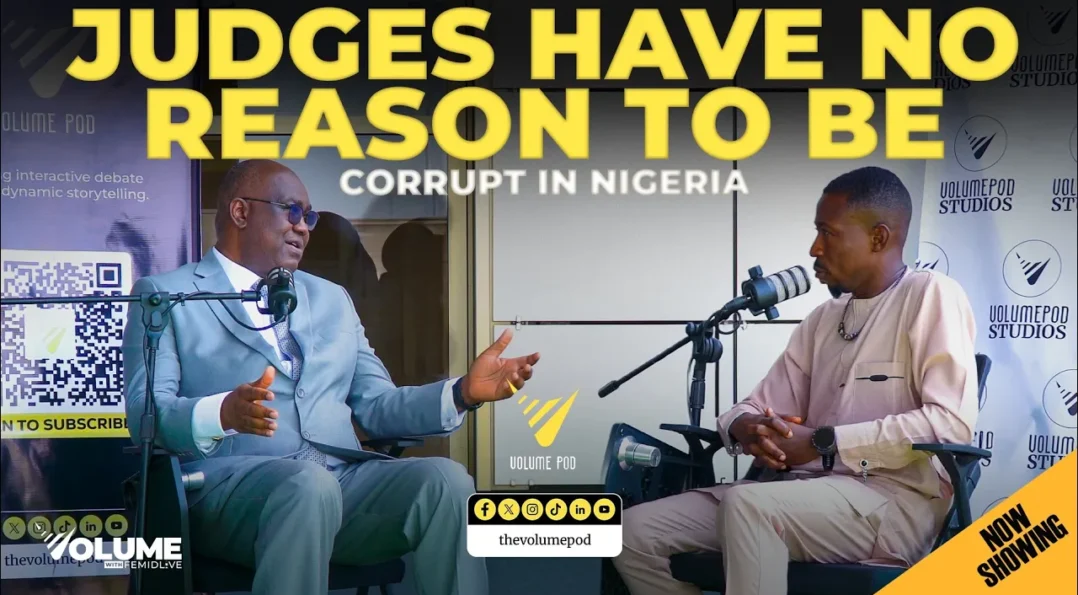
In a compelling dialogue at the National Conference on the Future of Democracy in Nigeria, Honorable Dr. Gbenga Olawepo Hashim provided a sobering assessment of the nation’s current political and judicial landscape. His insights challenge the common narrative that Nigeria’s problems are purely economic, suggesting instead that the country is grappling with a profound “poverty of values” that threatens the very foundation of its democratic institutions. The Problem with Institutional Recruitment Dr. Hashim highlighted a critical flaw in the formation of the Independent National Electoral Commission (INEC). While some recommendations for independence—such as funding via a first-line charge—were accepted during the transition from military rule, the method of recruiting leadership remains a point of contention. He argues that the current system allows the executive to maintain too much control by appointing “dodgy” individuals who are easily manipulated. “When you have a transparent process of recruitment and the person that is being appointed is subjected to public debate, he will hold his loyalty to society rather than to few people who appoint him in government.” [04:46] Material Poverty vs. Poverty of Values One of the most striking parts of the discussion centered on the phenomenon of vote-buying. While many attribute this to the economic hardship facing Nigerians, Dr. Hashim drew a historical parallel to the 1950s to illustrate that integrity is not dictated by wealth. He noted that even when Nigerians were materially poorer, they held their political leaders to higher standards. “It’s not a question of material poverty; it’s about poverty in values. We have to go back and strengthen our value system because it is these intangible things—values, culture—that build society.” [06:01] He further emphasized this point by contrasting the past and present: “In the 50s, if you give them a bag of rice, they will not vote for you. They will still vote for their trusted political leaders. But Nigerians today, some of them who eat rice every day, if you give them a cup of rice, they are ready to vote for you.” [05:51] The Independence of the Judiciary The conversation also turned to the judiciary, an institution often seen as the last hope for the common man. Dr. Hashim expressed concern that while judges are now better compensated than ever before, their independence seems more compromised than it was even under military dictatorship. He suggests that financial corruption has achieved what brute force could not. “What military dictatorship could not do, money corruption is doing now. Judges are now more paid than they have ever been paid… they have no reason not to stand for justice and equity.” [07:21] Looking Toward 2027 As Nigeria looks toward the 2027 elections, the fear of widespread vote-buying looms large. However, Dr. Hashim offered a glimmer of hope, suggesting that collective will can override financial manipulation. He believes that if the majority of the population is truly committed to change, the sheer volume of voters will make individual bribes inconsequential. “There will be vote buying, but it’s not going to be consequential if majority of people are ready really to vote for change. You can’t buy millions of people when they are out to really vote.” [06:34] Ultimately, Dr. Hashim’s message is a call to action for all Nigerians to reclaim their cultural and moral values. Without a foundation of integrity, material achievements and institutional structures will continue to crumble under the weight of corruption. Watch the full interview here: https://youtu.be/Csh7n_qacKE

Crisis of Values: Rethinking Nigeria’s Democracy and Judicial Integrity Read More »
Dr Umar Yakubu on Volume with FemiDlive

Nigeria Graft Advocate Urges Treason Charges for Billions Stolen

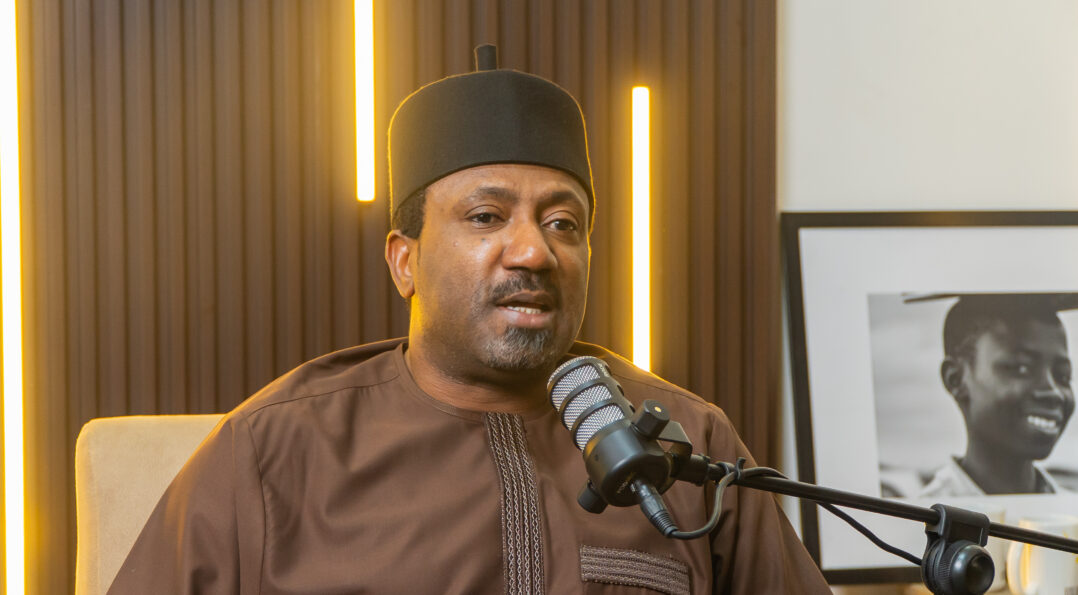
Nigeria should redefine its legal framework to treat high-level public sector corruption as a crime against the state equivalent to treason, a move that could significantly alter the risk-reward calculus for a political class accused of “scavenging” the nation’s wealth. Dr. Umar Yakubu, Executive Director of the Center for Fiscal Transparency and Public Integrity, argued that the traditional definition of treason—historically tied to selling state secrets or supporting foreign enemies—is obsolete in an era where illicit financial flows pose a greater existential threat to the nation than external invasion. “We need to transit from making corrupt offenses to become treasonable offenses,” Yakubu said in an interview with Volume with FemiDlive. “If you take money meant for a hospital… and you take it to another country, killing your own country, that is the context of why I feel we need to redefine treason” [15:45]. The proposal comes as Nigeria continues to bleed an estimated $15 billion annually in illicit financial flows [18:47]. For a nation grappling with a debt-servicing crisis and crumbling infrastructure, Yakubu contends that the $9 billion P&ID judgment saga—which Nigeria narrowly escaped—highlights how “treasonable acts” by officials can nearly bankrupt the state through fraudulent contracts and bribery [27:52]. The ‘Scavenging’ of Election Financing A central pillar of Yakubu’s critique is the role of the Independent National Electoral Commission (INEC). He argues that INEC’s failure to enforce regulations on political party financing is the primary driver of public sector graft [43:06]. “The most important institution to solve the corruption problem is actually INEC,” Yakubu said, noting that the agency focuses almost exclusively on logistics while ignoring its powerful regulatory mandate over campaign spending [39:23]. The astronomical cost of seeking office in Africa’s most populous nation—where a gubernatorial run can cost tens of billions of naira—forces candidates to “scavenge” from government parastatals to recoup investments [42:51]. This creates a cycle where lawmakers and chief executives prioritize “recovering” their election funds over governance, leading to a system where “political interest comes first before national interest” [18:13]. Real Estate: The ‘Dumbest’ Money Laundering Yakubu also pointed to the decoupling of Nigeria’s real estate market from its actual economic productivity. In the capital of Abuja, where luxury mansions are priced between 1 billion and 2 billion naira ($620,000 to $1.2 million), the advocate describes the sector as a massive, inefficient money-laundering machine for the political elite [36:28]. “The dumbest thing to do is to buy real estate… because they can’t even think of what to do” with stolen funds, Yakubu said [01:04]. He argued that because most Nigerian politicians lack backgrounds in wealth creation or industry, they simply “lock up capital” in property rather than investing in productive enterprises like pure water factories or studios, which require actual management and innovation [35:17], [36:11]. Transparency Gaps and the Religious Paradox The Center for Fiscal Transparency’s recent “Transparency and Integrity Index” revealed a startling lack of openness among the country’s most powerful financial institutions. Agencies like the Federal Inland Revenue Service (FIRS) and the Accountant General’s Office have frequently landed in the “red zone” for failing to publish basic fiscal data [45:04]. Yakubu’s methodology is blunt: “The least transparent you are, the more corrupt you are” [45:50]. He notes that the 63 government-owned enterprises (GOEs) that generate their own revenue often operate as “fiefdoms,” spending billions on cars and fuel while the general population is told to endure the removal of fuel subsidies [47:38], [51:30]. The interview also addressed the paradox of Nigeria’s high religiosity—where 95% of the population professes a faith—and its pervasive corruption. Yakubu attributed this to an “externalization of religion” where ritual practices like leading prayers or attending church on Sundays are disconnected from internal morality [11:19]. The Path Forward While President Bola Tinubu has focused on aggressive tax reforms and subsidy removals, Yakubu suggests the administration’s “political will” to fight corruption remains invisible [52:42]. He estimated that if just 10% of the energy used for tax reform was applied to fighting public sector corruption in the top 63 institutions, “corruption would drop by 90%” [54:07]. Until the cost of graft outweighs the benefit—potentially through the threat of the death penalty or life imprisonment associated with treason—Nigeria’s “shadow economy” will continue to outpace its formal one, leaving the state in a perpetual state of “bleeding” [18:39]. Watch the full interview  

Nigeria Graft Advocate Urges Treason Charges for Billions Stolen Read More »