
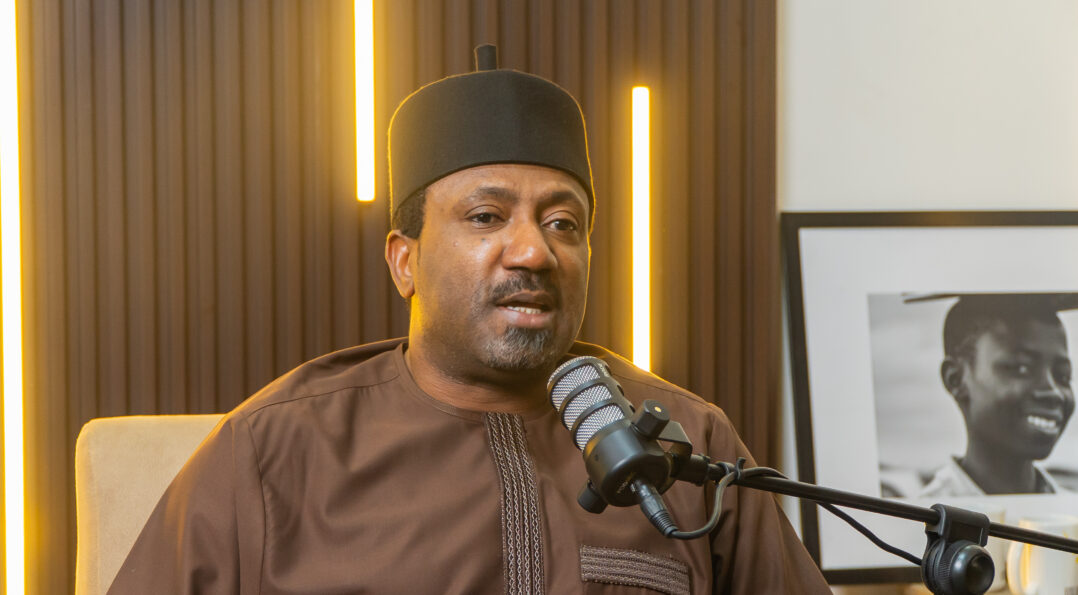
For decades, the relationship between the Nigerian state and its citizens has been defined by a precarious silence: the government provides little, and the people expect even less. But that silence is being shattered by a sweeping new tax reform that critics warn could turn a standard fiscal tool into a “weapon of oppression” in a nation already reeling from record inflation and a crumbling social contract.
In a blistering assessment of the country’s economic direction, Dr. Umar Yakubu, Executive Director of the Center for Fiscal Transparency and Public Integrity, says the government’s push for increased tax revenue is fundamentally flawed because it ignores the reality of life for the average Nigerian.
“Taxation is a tool of oppression when there is no service,” Yakubu said during an interview on Volume with FemiDlive. “If I provide my own security, my own water, my own electricity, and you still come to ask me for tax, what are you taxing? You are taxing my survival”.
A Social Contract in Tatters
The debate centers on a series of tax bills currently moving through Nigeria’s National Assembly, championed by a reform committee led by Taiwo Oyedele. While the administration of President Bola Tinubu argues these reforms are necessary to move Nigeria away from its “petrodollar” addiction and toward a sustainable revenue base, Yakubu argues the timing and the target are wrong.
He points to a massive “trust deficit” between the governed and the governors. In developed economies like the United Kingdom or Scandinavian nations, Yakubu notes, citizens see their taxes reflected in the National Health Service or public infrastructure. In Nigeria, those services are largely non-existent for the poor, who are now being asked to pay more while the political elite maintain lavish lifestyles.
“We have a situation where 0.1% of the population controls the wealth, yet they are the ones who pay the least in taxes through various exemptions and waivers,” Yakubu said. Meanwhile, the burden of consumption taxes like VAT falls disproportionately on the millions of Nigerians living below the poverty line.
The ‘Missing’ Billions
The most controversial aspect of Yakubu’s critique involves the 63 Government-Owned Enterprises (GOEs)—agencies like the Nigerian National Petroleum Company (NNPC) and the Federal Inland Revenue Service (FIRS) that generate trillions of naira in revenue.
Yakubu argues that before the government looks to the pockets of the poor, it must first address the “black hole” within these agencies. He claims that many of these institutions operate with zero transparency, keeping a vast majority of the funds they generate for “administrative costs” and “personnel expenses” that are never fully audited.
“Why are we putting pressure on a man selling tomatoes in the market when you have 63 institutions that generate billions and nobody knows exactly how that money is spent?” Yakubu asked. He suggested that if the government simply enforced efficiency and transparency in these 63 agencies, the need for aggressive new taxes on the public would vanish.
The Efficiency Crisis
The government’s reform efforts have been described as an attempt to “broaden the tax base.” However, Yakubu warns that without a corresponding increase in government efficiency, more revenue will simply lead to more waste.
He cited the removal of the fuel subsidy in 2023 as a prime example. The move saved the government trillions of naira, yet for the average Nigerian, the only result has been a 300% increase in transportation costs and a surge in food prices. “The people were told to make sacrifices, but where is the evidence of that sacrifice in the government’s own spending?” Yakubu said.
The strategist argues that Nigeria is currently “over-governed and under-served.” He notes that the cost of maintaining the National Assembly and the various layers of the federal bureaucracy consumes a staggering percentage of the national budget, leaving little for the actual development of the people.
A Warning for 2027
As Nigeria moves toward the next election cycle in 2027, the tax issue is becoming a political lightning rod. Critics argue that the government is using tax reforms as a way to satisfy international lenders like the IMF and World Bank, rather than focusing on the needs of the domestic population.
Yakubu’s warning is clear: a government that taxes its people without providing security or basic services is a government in peril. “The day the Nigerian people realize that they are paying for a government that gives them nothing in return is the day the social contract officially expires,” he said.
For now, as the tax bills navigate the legislative process, millions of Nigerians are left watching the cost of living rise, wondering if their meager earnings are the next target for a state that many feel has already taken enough.
Watch the full interview: https://youtu.be/-4mbQb7HLj4