Blog Posts

Nigerian Opposition Figure Slams ‘Disgraceful’ Leadership, Warns of National Siege

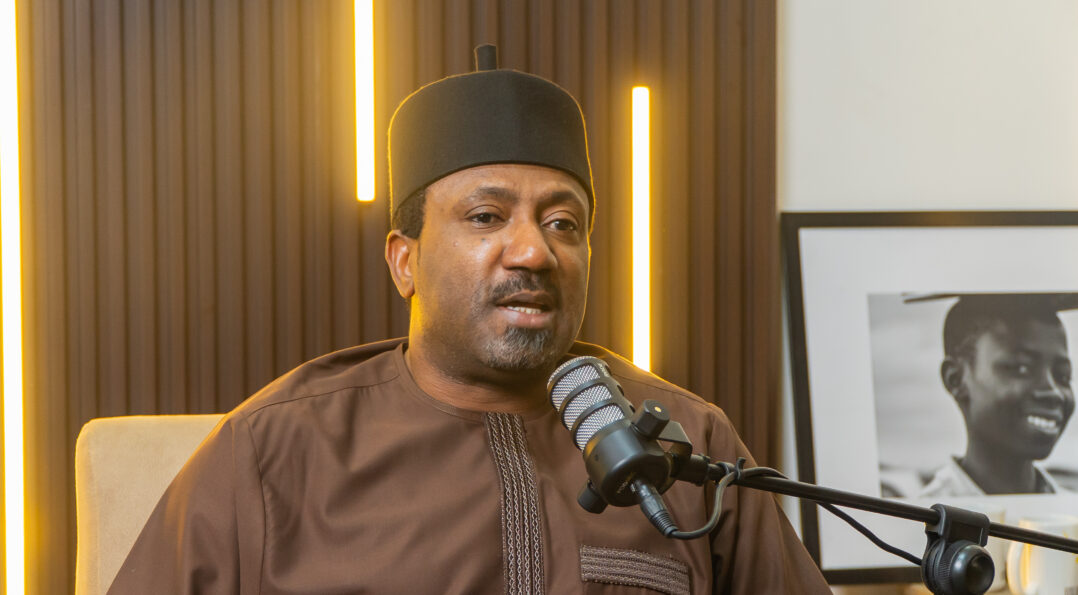
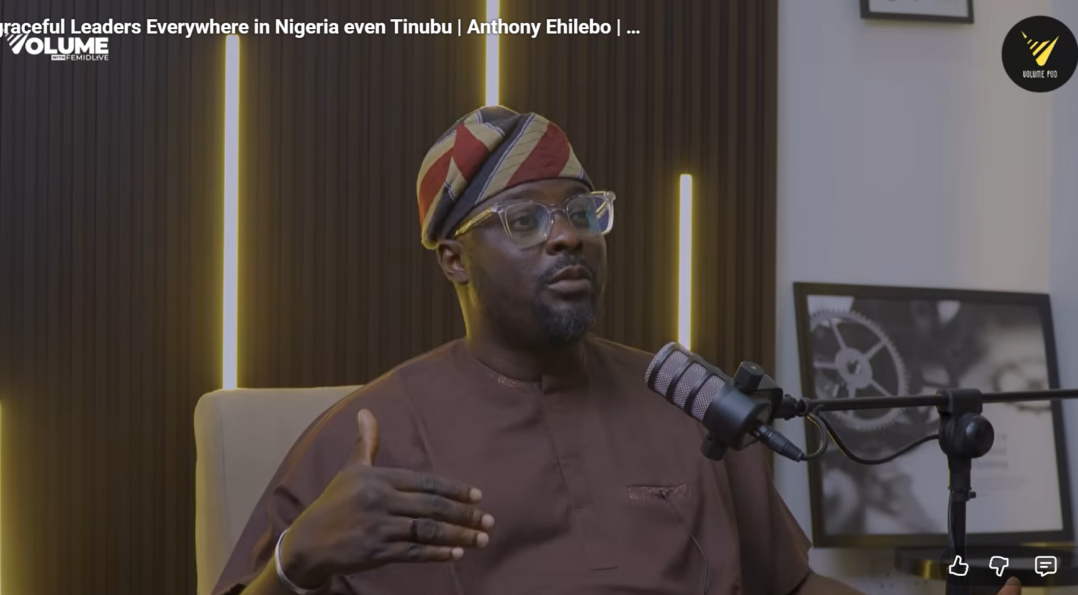
ABUJA — Nigeria is facing a systemic failure of leadership and remains “under siege” from a worsening security crisis that the current administration has failed to address, a prominent opposition figure said in a wide-ranging interview. Anthony Ehilebo, a chieftain of the People’s Democratic Party (PDP) and a legal practitioner, characterized the administration of President Bola Tinubu as being more focused on political survival for the 2027 elections than on the immediate safety and economic well-being of the population. “I am totally disappointed in his application of democratic norms and his application of good governance,” Ehilebo said during an interview on Volume with FemiDlive. “His financial intervention in Nigeria has failed Nigerians woefully. We have gone further deeper into poverty.” [22:36] Security Crisis and ‘International Invasions’ Ehilebo described Nigeria as a patient with “multiple cancers,” arguing that the security situation has deteriorated significantly since 2015. He noted that while the insurgency was once localized to the northeast with Boko Haram, it has now morphed into a nationwide crisis involving bandits, kidnappers, and international incursions. [11:32] He alleged that the country is facing an “invasion” from foreign elements on motorbikes entering from the Sahel region, a situation he claimed the government has refused to define accurately. [09:53] “Nigeria is under siege,” Ehilebo said. “You can see even the U.S. Congress and the U.S. State Department have put in more effort in two months than our entire National Assembly, the Federal Executive, and the Judiciary have combined in the last 10 years.” [12:43] He called for the immediate convocation of a National Security Conference to provide an emergency roadmap, warning that the president has only a narrow window before the country enters a full campaign cycle that often compromises governance. [13:08] Economic Criticism and ‘Oppressive’ Taxation The PDP official also targeted the government’s fiscal policies, specifically the removal of fuel subsidies and a new tax regime. He accused the administration of being a “Father Christmas” to state governors by distributing subsidy savings to them without ensuring transparent reinvestment in public infrastructure. [14:53] Ehilebo expressed concern that a proposed tax regime could be used as a “tool of oppression” against the political opposition. He argued that the state has no moral right to levy further taxes when citizens are already providing their own electricity, water, and security. [50:54] “What gives them the right to tax me when they are not providing governance?” he asked, citing constitutional requirements for the state to provide security. “I’m a local government unto myself. I provided power for myself; I provided water for myself.” [52:10] He further criticized the lack of frugality in government, citing the 30-billion-naira expenditure on the Vice President’s residence and the president’s large convoys as evidence of a leadership disconnected from the financial struggles of the citizenry. [53:28] Political Friction and the ‘Destruction’ of the PDP Turning to internal politics, Ehilebo launched a sharp critique of FCT Minister Nyesom Wike, accusing him of undermining the PDP and exerting undue influence over the Rivers State House of Assembly. He alleged that the 17 pro-Wike lawmakers in Rivers “cannot even breathe” without the minister’s authorization, a dynamic he said is destroying the democratic fabric of the state. [21:20] Ehilebo also raised alarms about judicial bias, claiming that certain judges are repeatedly assigned to cases involving the FCT Minister and the PDP, which he said “makes a mockery of our judicial system.” [32:12] In a surprising claim, Ehilebo asserted that former Vice President Atiku Abubakar had left the PDP for the African Democratic Congress (ADC), stating that the elder politician should have “stayed and fought for the party.” [38:26] Geopolitical Concerns The interview also touched on Nigeria’s role in West Africa. Ehilebo expressed suspicion regarding President Tinubu’s close relationship with French President Emmanuel Macron, suggesting that France may be seeking a new “foothold” in Nigeria after being expelled from other Sahelian nations. [57:36] He warned that Nigeria must be careful not to become a staging ground for “recolonization” or a pawn in a larger propaganda war involving Russia, the United States, and France. [01:00:32] Ehilebo concluded by urging Nigerians to demand more from their representatives. “If everybody starts telling lies, how far are we going to go?” he said. “The truth is what it is.” [37:56] Video Source: Disgraceful Leaders Everywhere in Nigeria even Tinubu | Anthony Ehilebo | Volume w FemiDlive  

Nigerian Opposition Figure Slams ‘Disgraceful’ Leadership, Warns of National Siege Read More »
Nigeria’s Economic Pivot Hits ‘Wits’ End’ as Political Opposition Vanishes

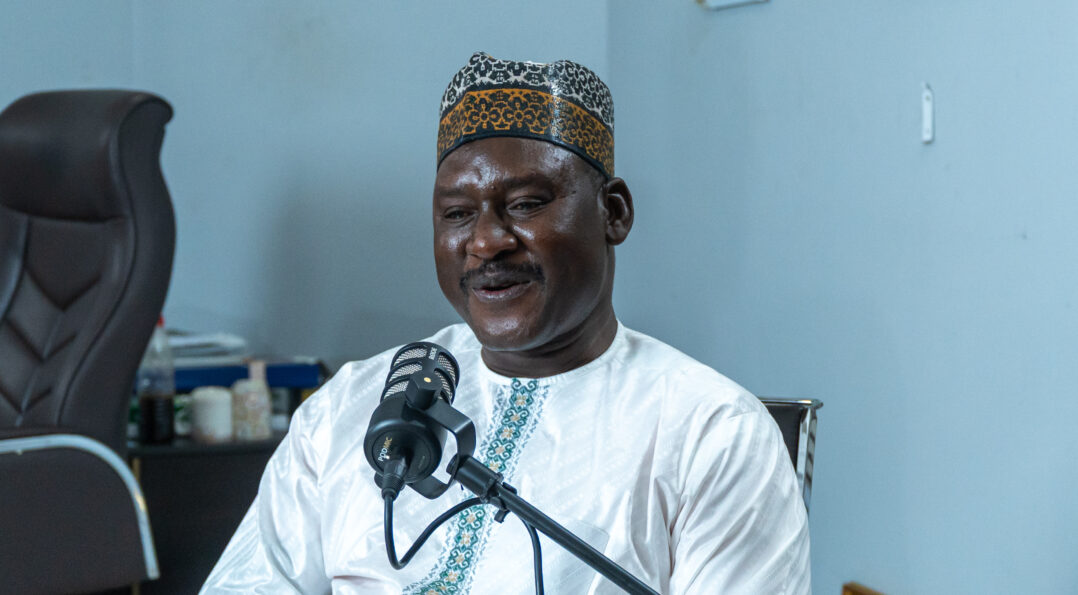
Nigeria’s attempt to transition toward a market-driven economy has reached a state of exhaustion, undermined by a “tactical rollback” of reforms and a political vacuum where a viable opposition no longer exists, according to Majeed Dahiru, a prominent Nigerian political strategist and public affairs analyst. In an expansive year-end assessment on the podcast Volume with FemiDlive, Dahiru argued that the nation’s democratic architecture is currently operating on only one of its two necessary pillars. While the ruling All Progressives Congress (APC) struggles with the fallout of its fiscal policies, the primary opposition—the People’s Democratic Party (PDP)—has descended into “post-Buhari oblivion,” leaving the electorate without a credible alternative framework for governance. “Nigeria is not only suffering from failure of governance,” Dahiru said. “Nigeria has a problem of failure of opposition”. He noted that for the first time in the country’s 25-year democratic journey, there is no organized political force offering a rigorous policy counter-narrative to the government’s controversial moves, such as the removal of fuel subsidies or the floating of the local currency. The ‘Tactical Rollback’ of Reforms The central economic thesis of President Bola Tinubu’s administration—the removal of the petrol subsidy and the unification of the Naira’s exchange rate—is being quietly dismantled to prevent a total social collapse, Dahiru contended. He described the current state of the Naira as “floating aimlessly” toward the 2,000-per-dollar mark before the central bank was forced to intervene. Dahiru pointed to audited financial statements suggesting that the government is still spending trillions of Naira on “energy security,” which he characterized as a euphemism for the very subsidies the administration claimed to have abolished. This “tactical rollback,” he argued, proves that the neoliberal orthodoxies currently being tested in Nigeria are ill-suited for its unique developmental stage. “There is no alternative to government intervention in energy,” Dahiru stated, suggesting that the administration’s initial “shock therapy” was more a result of ideological pressure than practical economic planning. He warned that the government’s failure is not the principle of intervention itself, but the “meritocracy” and integrity of the officials managing those interventions. The ‘E-Lock’ Metaphor for Institutional Decay The social consequences of these economic shifts are perhaps most visible in the hallowed halls of the National Assembly. In a striking anecdote illustrating the deepening chasm between the ruling class and the public, Dahiru revealed that lawmakers from Northern Nigeria have begun installing electronic locks on their office doors to barricade themselves against constituents seeking financial aid. “They can no longer cater for the number of people coming to see them,” Dahiru said, explaining that the traditional patronage networks of the North have been shattered by skyrocketing inflation. The “e-lock” has become the new symbol of a representative democracy where the representatives are now in hiding from the represented. Security and the ‘Genocide’ Debate The interview also touched on the worsening security situation in Nigeria’s Middle Belt, specifically in Plateau and Benue states. Dahiru criticized the semantic debates regarding whether the killings of agrarian communities should be labeled a “Christian genocide,” arguing that the focus on terminology distracts from the catastrophic failure of the state to protect its citizens. Noting that Nigeria has been designated a “country of particular concern” by international observers, Dahiru called for a “shock therapy” approach to national security. He made a poignant appeal for religious empathy, urging the Northern Muslim elite to take greater responsibility for addressing the “banditry” and “herdsmen” violence that emanates from within their demographic fold. “The people that are responsible for both the killing of members of our own family and our Christian brethren come from our family,” Dahiru said. The Road to 2027 Looking ahead to the 2027 election cycle, Dahiru was skeptical of the opposition’s ability to regroup. He blamed the PDP’s current “oblivion” on its decision to ignore the geographic zoning traditions in the 2023 election, which fractured its southern base and birthed the “Obidient” movement under Peter Obi. Without a “valid framework” for the future and an opposition capable of intellectual engagement, Dahiru warned that Nigeria risks remaining in a state of political and economic stasis, where policies are “aimlessly” floated and institutional doors remain electronically locked against the masses. Watch the full interview:

Nigeria’s Economic Pivot Hits ‘Wits’ End’ as Political Opposition Vanishes Read More »

Dr Umar Yakubu on Volume with FemiDlive

Nigeria Graft Advocate Urges Treason Charges for Billions Stolen

Nigeria should redefine its legal framework to treat high-level public sector corruption as a crime against the state equivalent to treason, a move that could significantly alter the risk-reward calculus for a political class accused of “scavenging” the nation’s wealth. Dr. Umar Yakubu, Executive Director of the Center for Fiscal Transparency and Public Integrity, argued that the traditional definition of treason—historically tied to selling state secrets or supporting foreign enemies—is obsolete in an era where illicit financial flows pose a greater existential threat to the nation than external invasion. “We need to transit from making corrupt offenses to become treasonable offenses,” Yakubu said in an interview with Volume with FemiDlive. “If you take money meant for a hospital… and you take it to another country, killing your own country, that is the context of why I feel we need to redefine treason” [15:45]. The proposal comes as Nigeria continues to bleed an estimated $15 billion annually in illicit financial flows [18:47]. For a nation grappling with a debt-servicing crisis and crumbling infrastructure, Yakubu contends that the $9 billion P&ID judgment saga—which Nigeria narrowly escaped—highlights how “treasonable acts” by officials can nearly bankrupt the state through fraudulent contracts and bribery [27:52]. The ‘Scavenging’ of Election Financing A central pillar of Yakubu’s critique is the role of the Independent National Electoral Commission (INEC). He argues that INEC’s failure to enforce regulations on political party financing is the primary driver of public sector graft [43:06]. “The most important institution to solve the corruption problem is actually INEC,” Yakubu said, noting that the agency focuses almost exclusively on logistics while ignoring its powerful regulatory mandate over campaign spending [39:23]. The astronomical cost of seeking office in Africa’s most populous nation—where a gubernatorial run can cost tens of billions of naira—forces candidates to “scavenge” from government parastatals to recoup investments [42:51]. This creates a cycle where lawmakers and chief executives prioritize “recovering” their election funds over governance, leading to a system where “political interest comes first before national interest” [18:13]. Real Estate: The ‘Dumbest’ Money Laundering Yakubu also pointed to the decoupling of Nigeria’s real estate market from its actual economic productivity. In the capital of Abuja, where luxury mansions are priced between 1 billion and 2 billion naira ($620,000 to $1.2 million), the advocate describes the sector as a massive, inefficient money-laundering machine for the political elite [36:28]. “The dumbest thing to do is to buy real estate… because they can’t even think of what to do” with stolen funds, Yakubu said [01:04]. He argued that because most Nigerian politicians lack backgrounds in wealth creation or industry, they simply “lock up capital” in property rather than investing in productive enterprises like pure water factories or studios, which require actual management and innovation [35:17], [36:11]. Transparency Gaps and the Religious Paradox The Center for Fiscal Transparency’s recent “Transparency and Integrity Index” revealed a startling lack of openness among the country’s most powerful financial institutions. Agencies like the Federal Inland Revenue Service (FIRS) and the Accountant General’s Office have frequently landed in the “red zone” for failing to publish basic fiscal data [45:04]. Yakubu’s methodology is blunt: “The least transparent you are, the more corrupt you are” [45:50]. He notes that the 63 government-owned enterprises (GOEs) that generate their own revenue often operate as “fiefdoms,” spending billions on cars and fuel while the general population is told to endure the removal of fuel subsidies [47:38], [51:30]. The interview also addressed the paradox of Nigeria’s high religiosity—where 95% of the population professes a faith—and its pervasive corruption. Yakubu attributed this to an “externalization of religion” where ritual practices like leading prayers or attending church on Sundays are disconnected from internal morality [11:19]. The Path Forward While President Bola Tinubu has focused on aggressive tax reforms and subsidy removals, Yakubu suggests the administration’s “political will” to fight corruption remains invisible [52:42]. He estimated that if just 10% of the energy used for tax reform was applied to fighting public sector corruption in the top 63 institutions, “corruption would drop by 90%” [54:07]. Until the cost of graft outweighs the benefit—potentially through the threat of the death penalty or life imprisonment associated with treason—Nigeria’s “shadow economy” will continue to outpace its formal one, leaving the state in a perpetual state of “bleeding” [18:39]. Watch the full interview  

Nigeria Graft Advocate Urges Treason Charges for Billions Stolen Read More »

Rafsanjani, Head of Transparency International Nigeria/ED CISLAC

Nigeria Governance Being ‘Privatized’ by Political Class, Watchdog Says

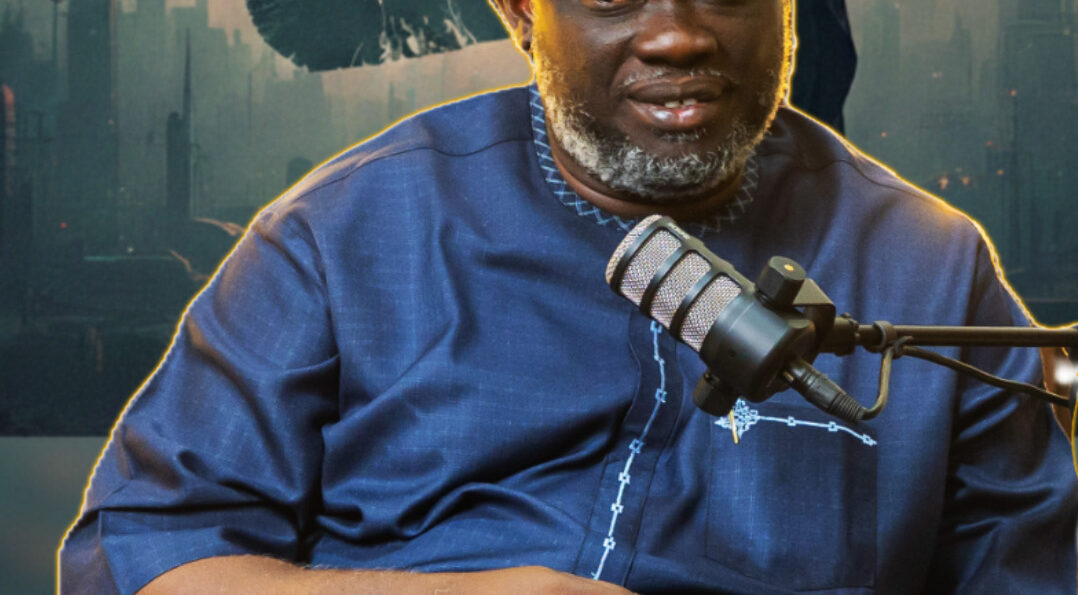
Nigeria’s political landscape is undergoing a “total colonization and privatization” by a ruling class that is actively rewriting legal frameworks to shield itself from criminal prosecution, according to one of the country’s leading anti-corruption advocates. Auwal Musa Rafsanjani, Executive Director of the Civil Society Legislative Advocacy Centre (CISLAC) and representative of Transparency International in Nigeria, said in an interview with Volume with FemiDlive that the nation’s democratic institutions are being systematically hollowed out. The trend, he warned, poses a fundamental threat to the rule of law and Nigeria’s standing in the global economy. “Thieves don’t make laws that will catch them,” Rafsanjani said, describing a legislative environment where individuals with questionable backgrounds have secured seats in the National Assembly to ensure immunity from accountability. “When you have political corruption, the very people who are supposed to be punished are the ones who have taken over the legislature, they have taken over the judiciary, and they have taken over the executive.” Executive Overreach and the ‘Pardon’ Culture The critique comes at a sensitive time for President Bola Tinubu’s administration, which has sought to attract foreign direct investment by promising structural reforms. However, Rafsanjani argued that recent executive actions—specifically the granting of presidential pardons to high-profile convicts—undercut these efforts and signal a lack of commitment to judicial independence. Rafsanjani alleged that the current administration has granted pardons to individuals previously jailed for offenses ranging from corruption and murder to drug trafficking. He questioned the economic logic of spending significant taxpayer resources on years of prosecution only for the results to be vacated by executive fiat without transparent consultation. “Tinubu has even done the worst,” Rafsanjani said, comparing the current administration’s record to its predecessors. He noted that such moves demoralize law enforcement agencies and suggest that political loyalty carries more weight than legal compliance. The ‘Ghana Warning’ and Global Isolation For investors and regional partners, the most startling portion of Rafsanjani’s assessment concerned Nigeria’s deteriorating international reputation. He warned that Nigeria’s failure to implement robust identity authentication systems and its culture of impunity for criminals could lead to unprecedented regional isolation. Specifically, Rafsanjani suggested that even neighboring West African nations, such as Ghana, may eventually feel compelled to bar Nigerians from entry to protect their own internal security. He pointed to a growing global trend where Nigerian citizens face increased scrutiny and “disrespect” at international borders due to the perceived integrity deficit of the country’s leadership. “If we do not have a system where we can verify who is who… even Ghana will one day say Nigerians cannot come in,” he said, citing the lack of a centralized, credible database for criminal records and identity management. Institutional Capture The interview also highlighted the breakdown of public procurement and the “personalization” of state resources. Rafsanjani detailed how chief executives across various government tiers often bypass formal bidding processes to award lucrative contracts to personal associates, family members, and “girlfriends”. This “street-level” corruption, he argued, is a direct byproduct of the “capture” of the state by a narrow interest group. He described a system where the police and judiciary are often used as tools for political intimidation rather than as impartial arbiters of justice. A History of Defiance Rafsanjani’s perspective is informed by decades of activism, beginning during Nigeria’s era of military rule. He recounted a 1989 incident at Bayero University Kano (BUK) where he was targeted for assassination by a mob due to his student leadership. He credited his survival to a group of both Muslim and Christian women who formed a human shield to protect him. That history of survival, he suggested, underscores the resilience required to challenge what he describes as an increasingly entrenched “plutocracy.” As Nigeria continues to navigate a complex economic recovery marked by high inflation and currency volatility, Rafsanjani’s warnings suggest that the “institutional risk” remains a primary hurdle. Without a decoupling of criminal interests from the lawmaking process, he concluded, the “Volume” of Nigeria’s potential will remain muffled by its own governance structures. Watch the full interview: https://youtu.be/QnUGGIVJRn8

Nigeria Governance Being ‘Privatized’ by Political Class, Watchdog Says Read More »