
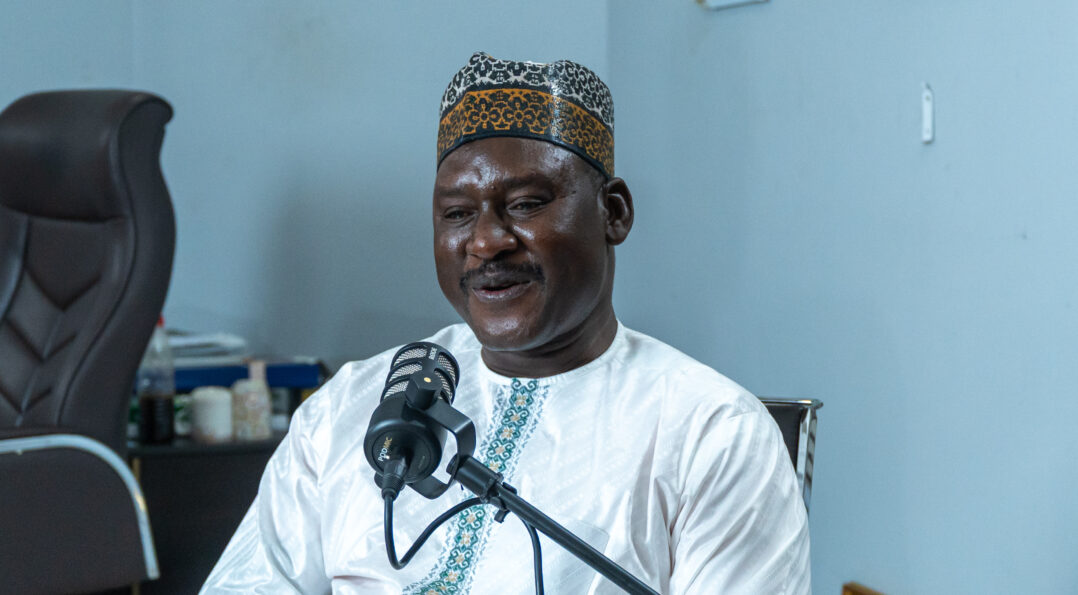
Nigeria’s political landscape is undergoing a “total colonization and privatization” by a ruling class that is actively rewriting legal frameworks to shield itself from criminal prosecution, according to one of the country’s leading anti-corruption advocates.
Auwal Musa Rafsanjani, Executive Director of the Civil Society Legislative Advocacy Centre (CISLAC) and representative of Transparency International in Nigeria, said in an interview with Volume with FemiDlive that the nation’s democratic institutions are being systematically hollowed out. The trend, he warned, poses a fundamental threat to the rule of law and Nigeria’s standing in the global economy.
“Thieves don’t make laws that will catch them,” Rafsanjani said, describing a legislative environment where individuals with questionable backgrounds have secured seats in the National Assembly to ensure immunity from accountability. “When you have political corruption, the very people who are supposed to be punished are the ones who have taken over the legislature, they have taken over the judiciary, and they have taken over the executive.”
Executive Overreach and the ‘Pardon’ Culture
The critique comes at a sensitive time for President Bola Tinubu’s administration, which has sought to attract foreign direct investment by promising structural reforms. However, Rafsanjani argued that recent executive actions—specifically the granting of presidential pardons to high-profile convicts—undercut these efforts and signal a lack of commitment to judicial independence.
Rafsanjani alleged that the current administration has granted pardons to individuals previously jailed for offenses ranging from corruption and murder to drug trafficking. He questioned the economic logic of spending significant taxpayer resources on years of prosecution only for the results to be vacated by executive fiat without transparent consultation.
“Tinubu has even done the worst,” Rafsanjani said, comparing the current administration’s record to its predecessors. He noted that such moves demoralize law enforcement agencies and suggest that political loyalty carries more weight than legal compliance.
The ‘Ghana Warning’ and Global Isolation
For investors and regional partners, the most startling portion of Rafsanjani’s assessment concerned Nigeria’s deteriorating international reputation. He warned that Nigeria’s failure to implement robust identity authentication systems and its culture of impunity for criminals could lead to unprecedented regional isolation.
Specifically, Rafsanjani suggested that even neighboring West African nations, such as Ghana, may eventually feel compelled to bar Nigerians from entry to protect their own internal security. He pointed to a growing global trend where Nigerian citizens face increased scrutiny and “disrespect” at international borders due to the perceived integrity deficit of the country’s leadership.
“If we do not have a system where we can verify who is who… even Ghana will one day say Nigerians cannot come in,” he said, citing the lack of a centralized, credible database for criminal records and identity management.
Institutional Capture
The interview also highlighted the breakdown of public procurement and the “personalization” of state resources. Rafsanjani detailed how chief executives across various government tiers often bypass formal bidding processes to award lucrative contracts to personal associates, family members, and “girlfriends”.
This “street-level” corruption, he argued, is a direct byproduct of the “capture” of the state by a narrow interest group. He described a system where the police and judiciary are often used as tools for political intimidation rather than as impartial arbiters of justice.
A History of Defiance
Rafsanjani’s perspective is informed by decades of activism, beginning during Nigeria’s era of military rule. He recounted a 1989 incident at Bayero University Kano (BUK) where he was targeted for assassination by a mob due to his student leadership. He credited his survival to a group of both Muslim and Christian women who formed a human shield to protect him.
That history of survival, he suggested, underscores the resilience required to challenge what he describes as an increasingly entrenched “plutocracy.”
As Nigeria continues to navigate a complex economic recovery marked by high inflation and currency volatility, Rafsanjani’s warnings suggest that the “institutional risk” remains a primary hurdle. Without a decoupling of criminal interests from the lawmaking process, he concluded, the “Volume” of Nigeria’s potential will remain muffled by its own governance structures.
Watch the full interview: https://youtu.be/QnUGGIVJRn8