
Nigeria’s Electoral Law and the FCT: Roles, Realities, and Reform — A Practical Guide for 2025
Nigeria’s electoral landscape is complex, shaped by a dense web of constitutional provisions, institutional structures, and on-the-ground realities. In this post, we unpack the role of the Federal Capital Territory (FCT) within the electoral framework, reflect on the 2023 experience, and explore practical reforms and ongoing challenges. We’ll also clarify key terms, outline the procedural realities of transmission and collation, and offer a candid look at how political actors, institutions, and citizens can contribute to a healthier democratic process.
- The FCT in the Nigerian federation: status, not a superior state
- Core point: The FCT is not a “special state” with elevated electoral status. Constitutionally, it is treated as a state within the federation, without superior electoral prerogatives over the 36 states.
- Supreme Court affirmation: The judiciary has affirmed that the FCT’s status should not elevate it above other states in the administration of elections. This matters for intergovernmental coordination, funding, and the application of electoral law across the federation.
- Practical implication: While the FCT has unique administrative and security considerations (as Nigeria’s capital and a major urban center), its electoral process must align with the same constitutional and legal framework that governs all states. This emphasizes uniformity in rules, procurement, voter registration, and the management of polling units and collation.
- Electoral process and terminology: transparency, practice, and clarity
- Transparency vs. practice: There is a necessary tension between the ideal of transparent processes and the practical realities on the ground. Nigeria increasingly emphasizes transparency—especially through digital tools and timely information—but traditional, manual elements (like results collation) remain part of the system.
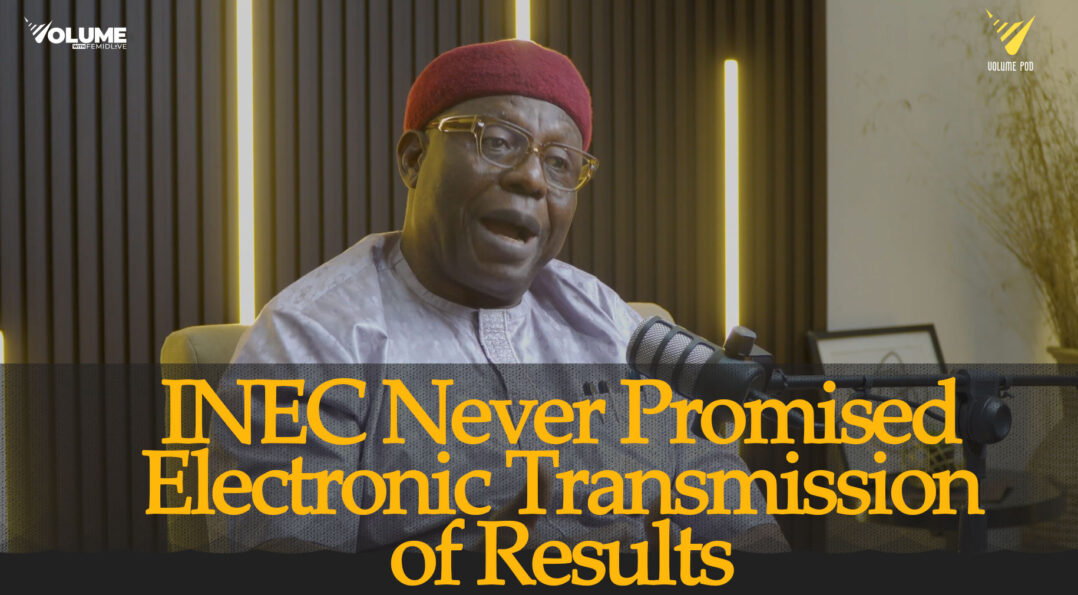
- Transmission vs. collation: Electronic transmission is used to promote transparency and real-time visibility of results, but it is not always the basis for final collation at national or local levels. The official collation still occurs through established procedures, which can involve multiple checks and balances.
- Clarity on terms to combat misinformation:
- Beavers: The biometric voter verification system used to authenticate voters at the polls.
- By-elections: Elections held to fill vacancies that arise between general elections.
- Reruns: Additional electoral rounds prompted by specific legal or constitutional triggers (e.g., unresolved results).
- Supplementary elections: Elections conducted to fill remaining vacancies or to address specific electoral contingencies.
- Inconclusive elections: Outcomes where no candidate meets the required threshold or where other procedural issues necessitate further action.
- Why this matters: Clear definitions help counter misinformation and ensure the public understands why certain actions—like postponements, reruns, or supplementary elections—occur.
- Reflecting on the 2023 elections: transmission debates and results handling
- Transmission debates: The 2023 cycle highlighted ongoing debates about how results should be transmitted and compiled, and how to balance speed, accuracy, and security.
- Explaining processes: The path forward involves consistent, accessible explanations of how results are generated, transmitted, and verified to prevent false narratives.
- Practical takeaway: Strengthening public communication about electoral processes, including timelines for results, the role of INEC and state bodies, and how collation works at local, state, and national levels, is essential to building trust.
- Institutional structure and reforms: INEC, SIECs, and integration
- INEC vs. SIECs: The Independent National Electoral Commission (INEC) is the national body responsible for federal elections, while State Independent Electoral Commissions (SIECs) handle local government elections in some states.
- Integration and independence: Calls for stronger integration between INEC and SIECs aim to reduce gubernatorial influence over state electoral bodies, minimize political interference, and promote consistent standards across levels.
- Reform proposals (longer-term independence):
- Prohibiting recent party membership for key appointees to reduce conflicts of interest.
- Independent shortlists for appointments to electoral bodies, reducing political gatekeeping.
- Robust oversight mechanisms to ensure accountability without compromising operational independence.
- Practical impact: These reforms would ideally strengthen impartial administration, reduce incentives for partisan capture, and improve public confidence in electoral outcomes.
- Practical challenges in Nigeria’s elections
- Logistical complexity: Thousands of polling units, collation centers, and ad hoc staffing create a heavy logistical burden. The practice of using lecturers and vice-chancellors as collators highlights a reliance on often highly skilled professionals outside the core electoral workforce.
- Security, transportation, and environment: Remote and rural areas pose challenges for voter access, ballot security, and timely vote counting. Weather, terrain, and security considerations affect logistics and safety.
- Voter registers and turnout: Ensuring accurate voter registers, facilitating PVC (Permanent Voter Card) registration, and maintaining safe, high-turnout elections remain central concerns. Periodic purges or updates to voter rolls after multiple electoral cycles are proposed to improve accuracy, while balancing inclusivity.
- Practical takeaway: Any reform must carefully weigh the need for accuracy and integrity against the risk of disenfranchisement or exclusion, especially for marginalized communities or transient populations.
- Election timing and constitutional constraints
- Single-day nationwide voting debate: Arguments against a single-day, nationwide vote often center on constitutional tenure limits, potential emergencies, and regional disparities in readiness.
- Staggered elections and emergencies: A staggered approach can accommodate varied local contexts but requires clear constitutional rules for handling emergencies, extensions, or suspensions, and guarantees to avoid a governance vacuum.
- Practical takeaway: Any change to timing must be anchored in constitutional provisions, with contingency plans for emergencies and a transparent framework for extending or adjusting timelines.
- Role of political actors and civic engagement
- The reality of political pressure and manipulation risks: Elections occur within a political environment where actors may attempt to influence outcomes. A democratic culture among elites and citizens is essential to resist manipulation and uphold the integrity of the process.
- Civic engagement: Encouraging people to register and participate remains critical. Combating cynicism requires constructive discourse, accessible education about how elections work, and visible accountability for breaches of rules or abuse of office.
- Practical takeaway: Citizens should be empowered with information, protected by transparent processes, and encouraged to participate through credible, non-discriminatory registration and voting opportunities.
- Campaigns, pre-election activities, and regulatory gaps
- Distinction between official aspirants/candidates and third-party campaigns: There is a need to clearly delineate who is officially running and what third-party groups can or cannot do in terms of political action.
- Premature campaigning and legal lacunae: Premature campaigning remains a concern, as does the gap in laws governing third-party campaigns and aspirant activities ahead of elections.
- Call for tighter laws: Stronger regulations around third-party campaigns and pre-election activities would help ensure a level playing field and reduce the potential for 규리 manipulation or early mobilization that advantages incumbents or well-funded groups.
- Practical takeaway: A comprehensive legal framework that clarifies permissible activities, funding sources, and timelines for campaigns would reduce ambiguity and help enforce electoral integrity.
Bringing it all together: practical steps for the near future
- Clarify terminology publicly: Publish a plain-language glossary of electoral terms (Beavers, by-elections, reruns, supplementary elections, inconclusive elections) and include real-world examples to improve understanding and counter misinformation.
- Strengthen independent administration: Pursue reforms that insulate electoral bodies from political influence, including independent appointment processes, longer terms, and robust oversight mechanisms.
- Harmonize transmission and collation: Maintain the transparency benefits of electronic transmission while ensuring that collation remains a rigorous, auditable process with clear rules for when and how results are finalized.
- Improve logistics and capacity building: Invest in poll worker training, digital tools, and logistical planning to reduce reliance on ad hoc personnel and to better manage remote or challenging environments.
- Expand public education and engagement: Launch ongoing voter education campaigns to explain the electoral cycle, how results are processed, and why certain procedures (like delays or reruns) are necessary for legitimacy.
- Revisit timing with constitutional clarity: If timing for elections is adjusted, ensure constitutional alignment, contingency planning, and transparent communication about any changes.
- Regulate campaigns and actors: Close legal gaps around third-party campaigns and aspirant activities, with clear enforcement mechanisms and penalties for violations